

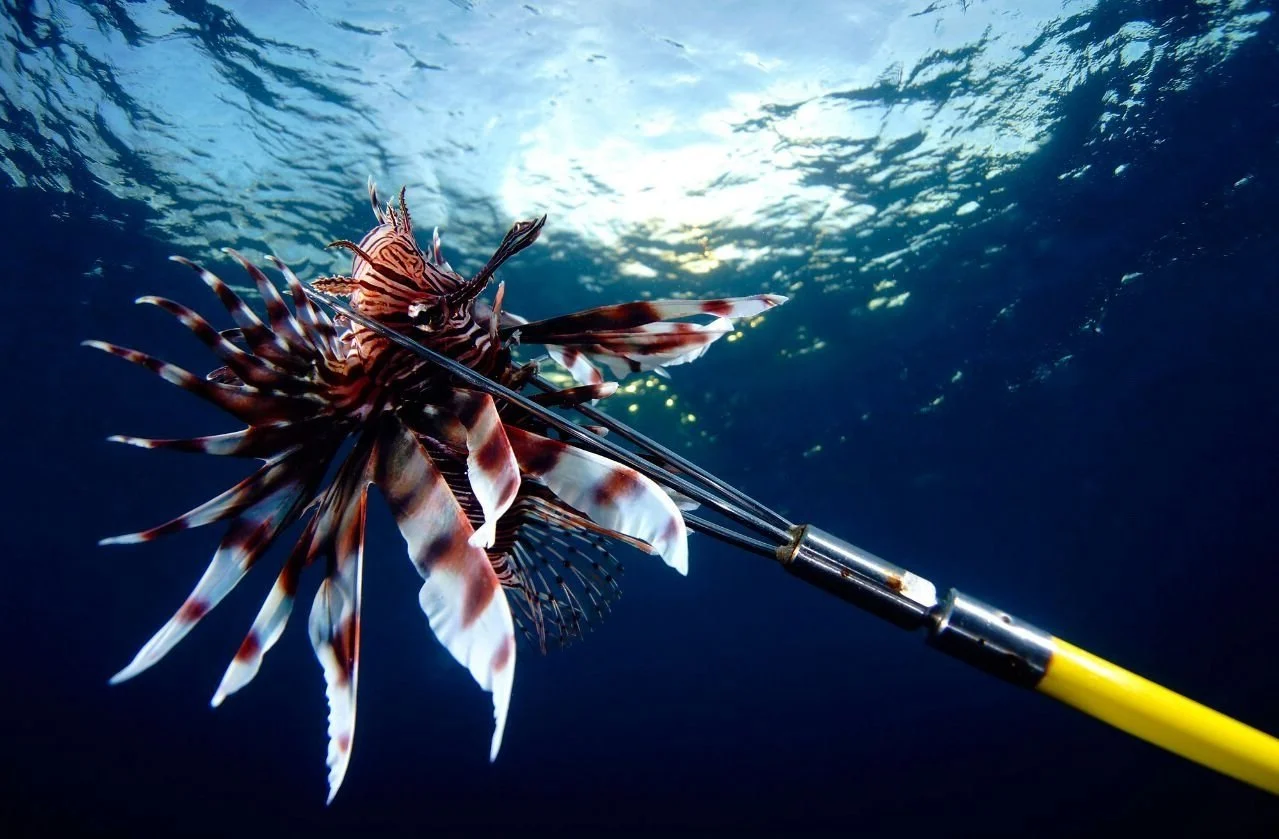
Lionfish are caught with spears


Invasive

Hunting
Control

Venom

Indo-Pacific and Red Sea
Bad Lionfish!!
Lionfish are invasive in The Caribbean and Mediterrenean. They arrived in the region through human activity, most likely after aquarium releases and accidents in the 1980s in Florida and from there they spread out all over.
Lionfish have no natural predators in the Caribbean and Mediterranean, the fish or their eggs aren’t eaten. And with two million (!!) eggs a year, it is no wonder they’re taking over the place (see picture -> )
The problem though is that Lionfish feed on nearly every small reef species they encounter: baby parrotfish, snappers, groupers, and the tiny cleaners that keep corals healthy. When those crucial reef fish disappear, algae takes over and the corals begin to suffocate under the growth. And we need corals for the ecological system of the ocean. And we need the ocean for basically all life on earth!

Handloaded sling spear
Join the mission as a hunter
Lionfish Caribbean is powered by a community of around 50 local hunters who remove lionfish from our reefs .
We buy every fish they catch, supporting their work and keeping the impact close to home.
As a community-driven company we make real, measurable impact for Curaçao’s reefs, one lionfish at a time.
Want to becoma a Lionfish hunter too, learn Lionfish hunting, sign up as a hunter, join our events and protect the reef with us!

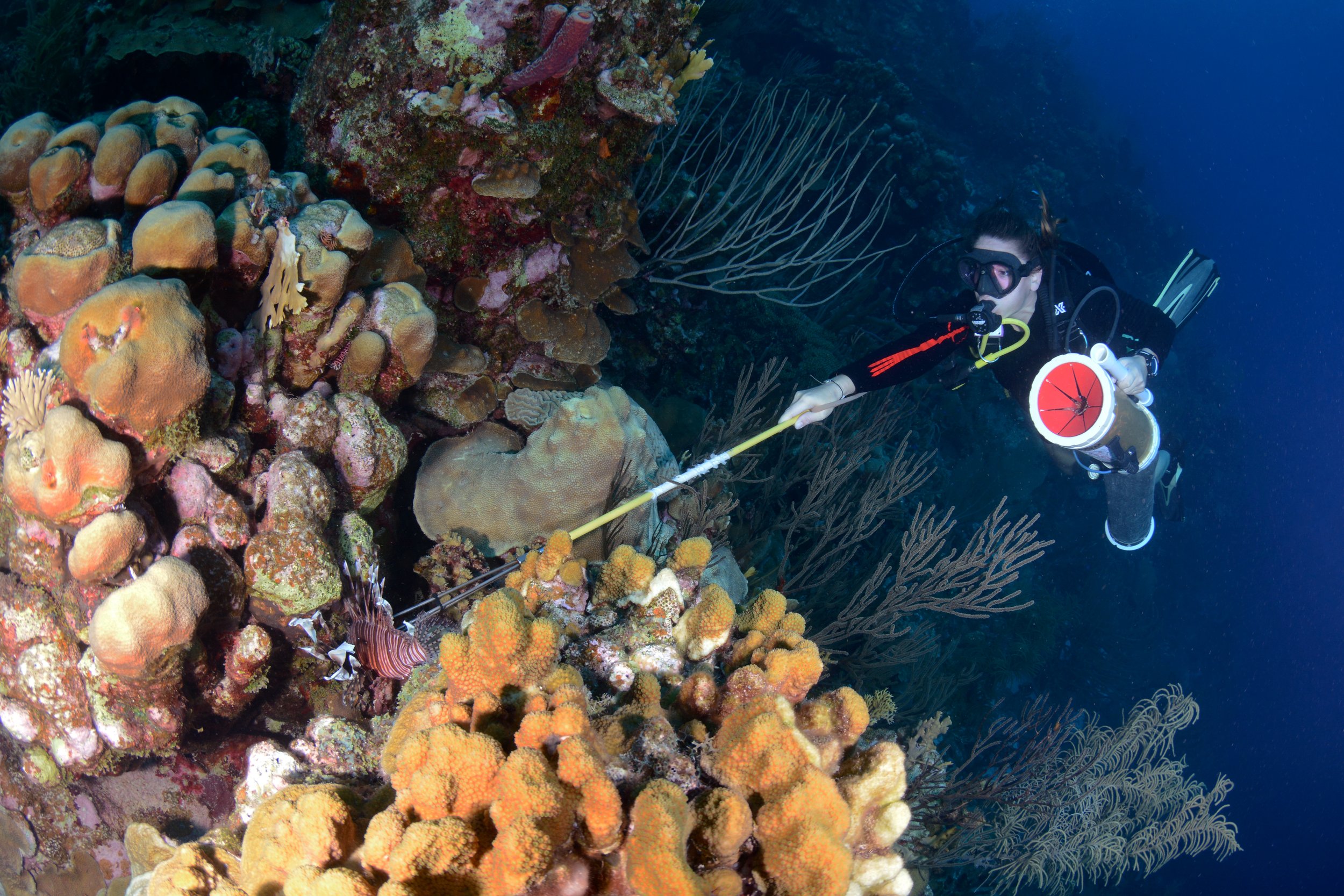
What to do when stung
OUCH! F*&$#!!
When stung by a Lionfish, the venom is injected into the body through grooves in the spines. This venom contains a potent mixture of neurotoxins, enzymes, and proteins that can lead to intense pain, swelling, redness, and in some cases, more severe reactions such as nausea, vomiting, and difficulty breathing.
Immediate Response
If you are stupid enough to sting yourself:
Apply Heat! As hot as possible, right into the sting. It can help denature the venom and alleviate pain. Best is a lighter and that iron part on top of a lighter, but you can use also hot water (not scalding) or a hot compress.
After a few hours of heat, you can cool the swollen area with a cold compress.Take Painkillers! Over-the-counter painkillers such as ibuprofen or acetaminophen can help manage the pain and discomfort caused by the sting. Follow the recommended dosage instructions.
Hit the bar for a good Happy hour! It will relieve the pain and you will make some extra friends with a cool story!
Monitor for Complications: Monitor for any signs of allergic reactions or systemic symptoms such as difficulty breathing, chest pain, or fainting. Seek medical attention immediately if these symptoms occur.

Treat the wound if occurs: If a blister or wound develops after a Lionfish sting, it's crucial to keep the area clean and dry to prevent infection.